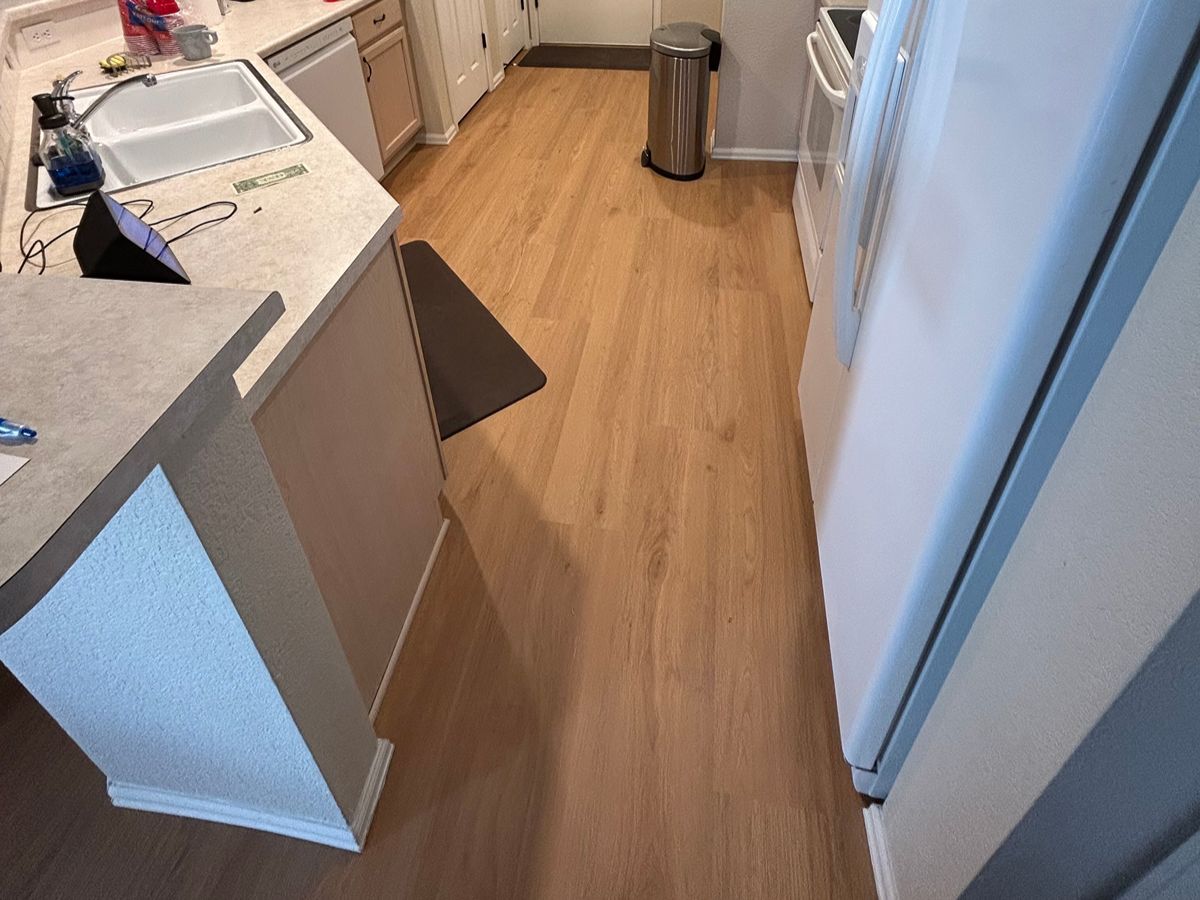
Yes, LVP can be installed over radiant heat, as long as the specific product you choose is rated for it and the floor surface stays under the temperature limit the manufacturer sets. In Denver, it is worth considering anywhere a cold floor is a problem, and finished basements are the obvious case, since concrete slabs sit against cold ground all winter and stay chilly even when the rest of the house feels warm.
Around Sloan’s Lake, older homes sit alongside a swath of new development, and either can have a below-grade space warmed by electric cable or hydronic tubing under the finish floor. Vinyl plank can work on top when the specific product is rated for radiant heat.
Not every luxury vinyl plank is approved for every type of radiant heat, and the ones that are still have a ceiling on how warm the floor can get. Excessive heat can make the plank expand and buckle, so the whole job comes down to matching a heat-rated product with a system that never pushes past its limit. Check the product data sheet before anyone buys material.
Forced air warms the room but can leave a floor over a concrete slab cold underfoot, while radiant heat warms the slab and the finish floor directly.
Which type of LVP flooring is best for underfloor heating?
The best LVP for underfloor heating is the one its manufacturer specifically rates for your type of radiant system, and the installation method, floating or glued down, has to be one that product’s instructions allow over heat.
Approval is product-specific, so a plank being labeled rigid core is not enough on its own. Always verify your vinyl’s radiant heat rating and max temperature with the manufacturer before you commit to a color or a box count. The system type steers the choice too. Some products are cleared for both electric and hydronic, while others are approved for one and not the other, so the data sheet has to match the heat under your floor.
What is the maximum temperature that vinyl flooring can tolerate?
There is no single universal number. The maximum floor surface temperature is set by each LVP manufacturer, and it is printed in that product’s installation guide, so check the sheet for the exact plank rather than trusting a general figure. That said, several major manufacturers cap the floor temperature at 85°F and at least one sets it at 82°F, so treat the lower figure as your guide until the paperwork for your plank says otherwise.
The way to hold that line is a thermostat with a floor sensor, which reads the floor itself and keeps it from passing the plank’s limit.
Should I put anything under my vinyl plank flooring?
Over radiant heat, be careful what you put down, because the wrong underlayment fights the heat you paid for. If your plank’s instructions allow a pad over radiant heat at all, use only one they approve, since insulating pads reduce heat transfer and trap warmth under the floor instead of letting it rise into the room. A thick foam pad meant for a normal subfloor can turn a good heated floor into a lukewarm one.
The other rule is not to stack cushion where the plank does not want it. Some rigid-core products with an attached pad cannot go over a separate underlayment at all, and adding one can void the warranty. For hydronic or electric cable systems, several manufacturers require at least half an inch between the heat source and the plank, and the plank goes over that flat surface.
What is the best flooring to put over radiant heat?
Tile and rated LVP both work over radiant heat, and which one fits depends on the room. Tile conducts heat well and shrugs off moisture. LVP gives you a wood look and, depending on the product, waterproof construction, which makes it a good fit for finished basements, family rooms, and other below-grade spaces.
Whatever the material, one step protects the floor after install: bring the heat up slowly. Raise it roughly 5°F a day until you reach your desired temperature, so the floor never overheats. Several manufacturers also want the system running for two weeks or more before the install to drive moisture out of the slab, then turned down while the flooring goes in.
If a cold floor is keeping part of your home from getting used, the right plank over radiant heat can change that. Every vinyl flooring installation we do in Denver is backed by a 100% satisfaction guarantee and a full 18-month warranty. To get started, book a free in-home estimate and we will bring samples so you can see them in your own lighting, or call CMC Flooring LLC at (720) 382-3006.