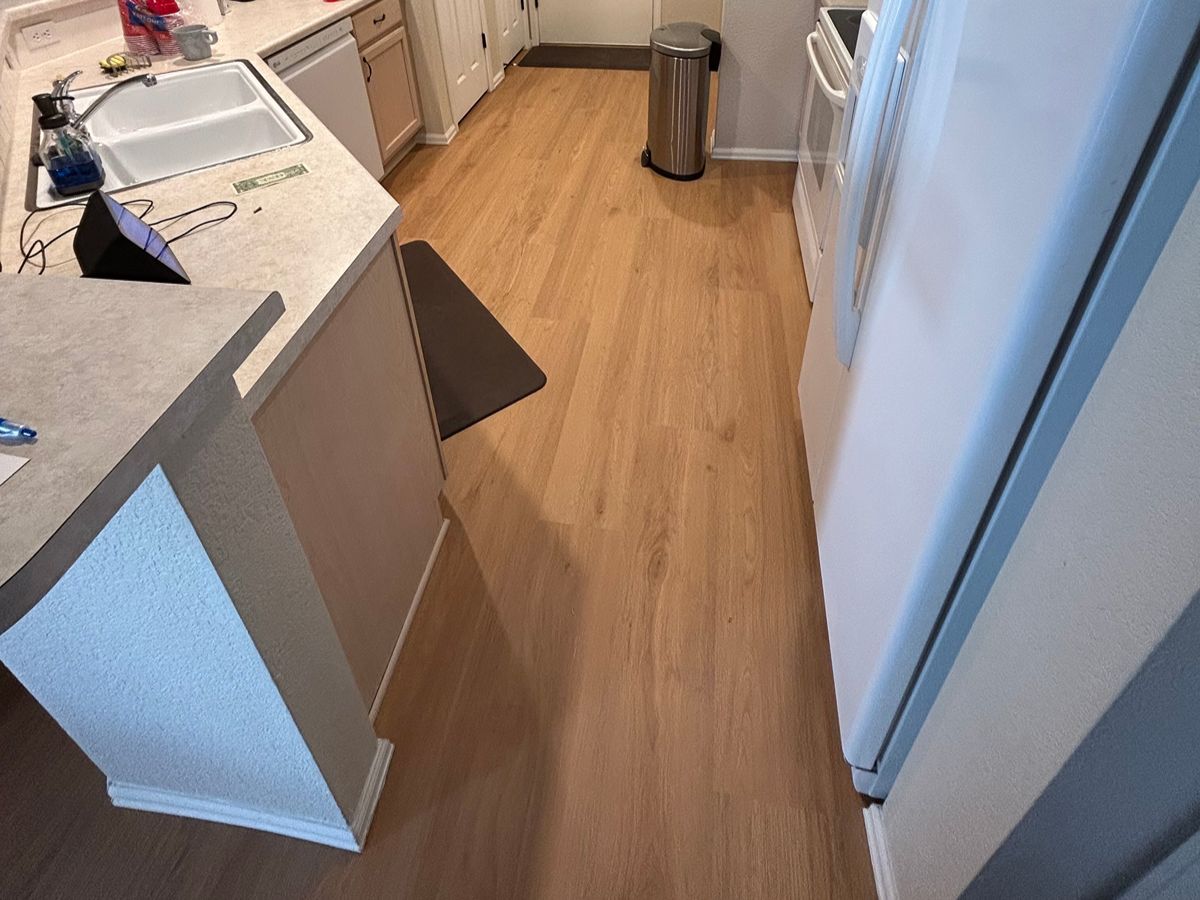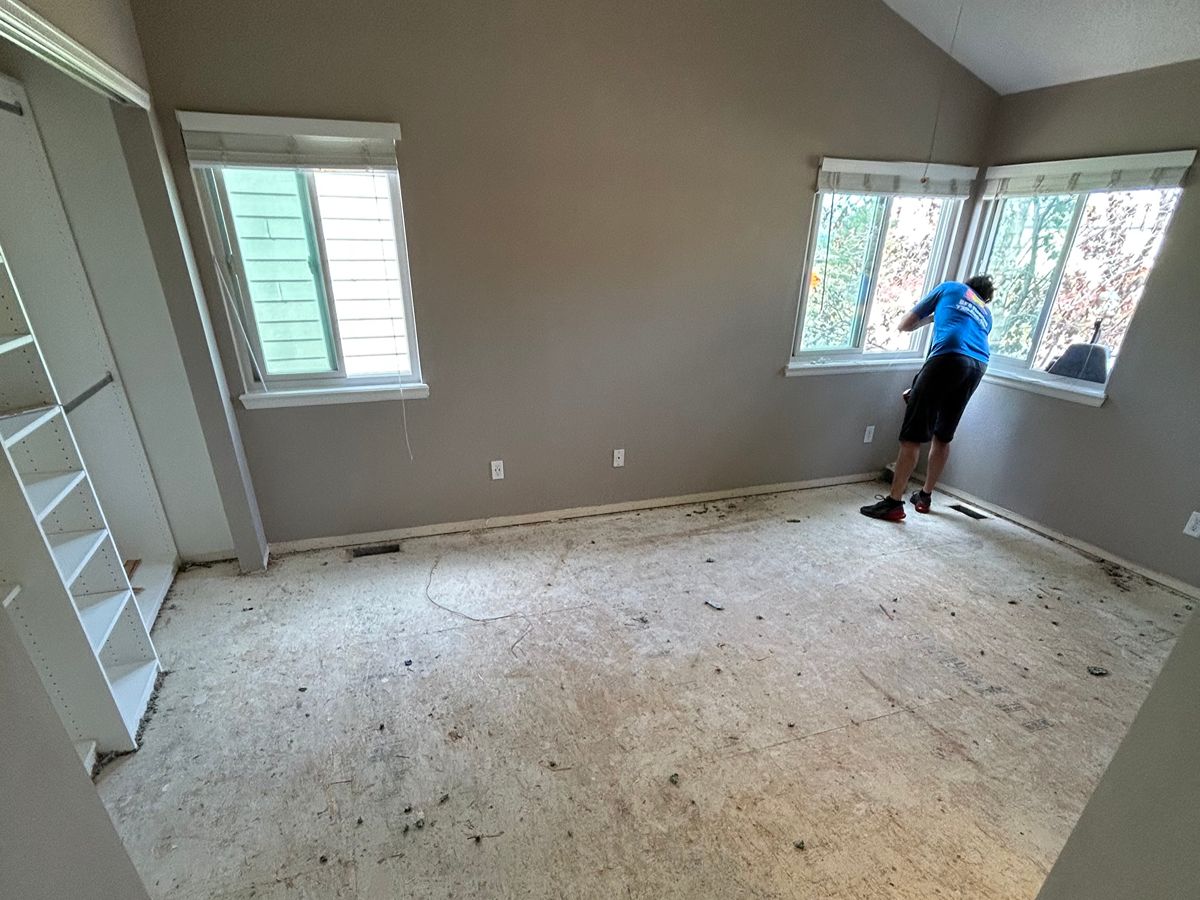
For most Denver homes, installing luxury vinyl plank throughout takes about two to five working days once the material is on site and acclimated, and the acclimation itself usually adds 24 to 48 hours before a single plank goes down. A 1,500 to 2,000 square foot floor, which covers a lot of the mid-century ranches and bungalows around town, tends to land in the two-to-three-day range for the actual laying, with larger multi-level homes or heavy furniture moving pushing it toward the longer end.
What actually sets the clock in this city is the house itself. Denver’s older housing stock is full of Craftsman bungalows, Denver Squares, and post-war ranches, and those floor plans were drawn for a different era, so you get narrow hallways, angled closets, and rooms that meet at anything but a clean 90 degrees.
The install day count moves with three things: the total square footage, the layout, and whether furniture and old flooring have to come out first. A wide-open main level goes fast because planks run in long, uninterrupted rows. A home chopped into small bedrooms, a bathroom, a laundry nook, and a couple of closets slows the pace, because every doorway and jog in the wall means more measuring and more cuts. Removing existing tile or glued-down vinyl and prepping the subfloor flat is its own step, and it can add a day on its own.
Denver’s build eras matter here more than people expect. Bungalows in the city were primarily built from about 1900 through 1930, and the mid-century ranches came a few decades later, which means uneven subfloors, settled slabs, and door casings that were set long before anyone planned for a floating floor. Those conditions get handled during install, not skipped, and they factor into an honest timeline for a home in a neighborhood like Wash Park, Park Hill, or the older streets of Capitol Hill.
Does LVP take time to settle after installation?
Most of the settling with luxury vinyl happens before it goes down, not after. The planks need to acclimate to the room’s temperature and humidity first, and many manufacturers recommend acclimating luxury vinyl flooring for 24 to 48 hours in the installation space, though some product instructions call for no acclimation at all. Others call for longer, and a few brands suggest up to 72 hours, so the exact number depends on what you buy and what its instructions say.
Why it matters comes down to how vinyl reacts to its environment. Even though luxury vinyl is more stable than natural wood, it still expands and contracts slightly with temperature and humidity changes. If the boxes went straight from a cold delivery truck to the floor with no adjustment period, the planks can shift after they are locked in, and that contraction can create gaps between planks or undermine the click-lock mechanism that holds them together. Rigid-core and SPC products are the most stable of the bunch, but even those benefit from sitting in the room first. Once a properly acclimated floor is installed, it is not still moving under you, so there is no separate multi-day settling wait after the crew finishes.
How soon can you walk on LVP after installation?
With a floating click-lock floor, which is how most luxury vinyl goes in around here, you can walk on it as soon as the last plank is locked in place. A properly installed floating floor with an expansion gap around the perimeter is unlikely to be any more affected by foot traffic on its first day than after its hundredth. That is one of the real advantages of LVP over a floor that has to cure.
Glue-down installations are the exception, and they change the timing. When the planks are bonded to the subfloor with adhesive, that adhesive needs time to set before you put weight on it, and the common guidance is to wait about 24 hours before normal foot traffic on a glued-down vinyl floor. Walk on it too early and the stress can weaken the bond while it is still wet. Denver homes with finished basements on concrete slabs sometimes get a glue-down or moisture-managed approach down there, so which method you have decides whether the room is usable the same evening or the next day. If you are not sure which system was used, ask the crew before you start moving through the space.
How long after installing LVP can you put furniture on it?
Walking on a new floor and dropping a loaded bookshelf onto it are two different things, and furniture waits longer. For a floating click-lock floor, it is smart to give it at least 24 to 48 hours before you slide heavy pieces or appliances back into place, mostly to avoid shifting planks or scuffing a fresh surface. For glue-down LVP, the wait is longer because the adhesive is still curing, and many manufacturers recommend between 48 and 72 hours before furniture goes back on a glued-down floor.
A few habits protect the floor either way. Lift furniture rather than dragging it, since dragging heavy pieces or sharp objects across new planks can damage the surface even after the wait period is over. Put felt pads under legs, and use wide rests under anything with narrow feet so the weight is spread out. Rolling chairs and appliances are the usual culprits, so those go back last. In a full-home job, plan the sequence room by room, letting each finished area rest while the crew moves ahead, so nothing gets loaded before it is ready.
How much waste should I expect with LVP?
Plan on ordering more material than the bare square footage of your rooms. For straight-lay LVP in standard rectangular spaces, the industry-standard overage is about 5 to 10 percent, and it covers end cuts at the walls, staggered row offsets, and the occasional short piece that cannot be reused. LVP is fairly forgiving because an off-cut from the end of one row can often start the next row, which keeps waste low.
The layout is what pushes that number up, and Denver’s older homes push it more than a new open-concept build would. Diagonal, herringbone, and chevron patterns raise the overage to 15 percent or more because every plank meets the wall at an angle and the triangular off-cuts cannot be reused. Rooms with lots of closets, doorways, and jogged walls also climb, and wider planks can produce bigger drop pieces that some installers find harder to reuse, though how much this adds to waste is debated. One more reason to order extra: keep a spare box from the same production run, because LVP products get reformulated and discontinued regularly, and a matched piece from the original lot is what you want if a plank ever gets damaged years down the road.
Figuring out the real timeline and material count for your home is easier when someone measures it in person and sees the actual rooms, closets, and doorways. We bring flooring samples right to your home so you can see the colors in your own light, and our free in-home estimate covers the honest day count and the right amount of material for your layout. When you are ready to plan your luxury vinyl plank installation in Denver, reach out to CMC Flooring or get in touch to set up a visit, and you can also call us at (720) 382-3006.