Installed laminate flooring in Denver commonly runs somewhere between about $3 and $11 per square foot, with the product and the shape of the room deciding where a job lands. That figure bundles the planks and the labor together, so a straightforward 300 square foot room might come out anywhere from about $900 to $3,300 before any add-ons.
Laminate is one of the more budget-friendly floors you can put down here. The per-foot range only tells part of the story, though, because a few line items can move your total up or down before the crew ever snaps the first plank.
The biggest swing comes from the laminate itself. Thinner boards, around 6mm, generally sit toward the bottom of the range, while thicker 10mm or 12mm planks with a tougher surface and a more realistic wood look tend to push toward the top. On top of the material, you are paying for labor, and then for extras like tearing out the old floor or leveling a rough subfloor. None of that is hidden, but it does mean a real quote depends on your specific room, not a flat per-foot number.
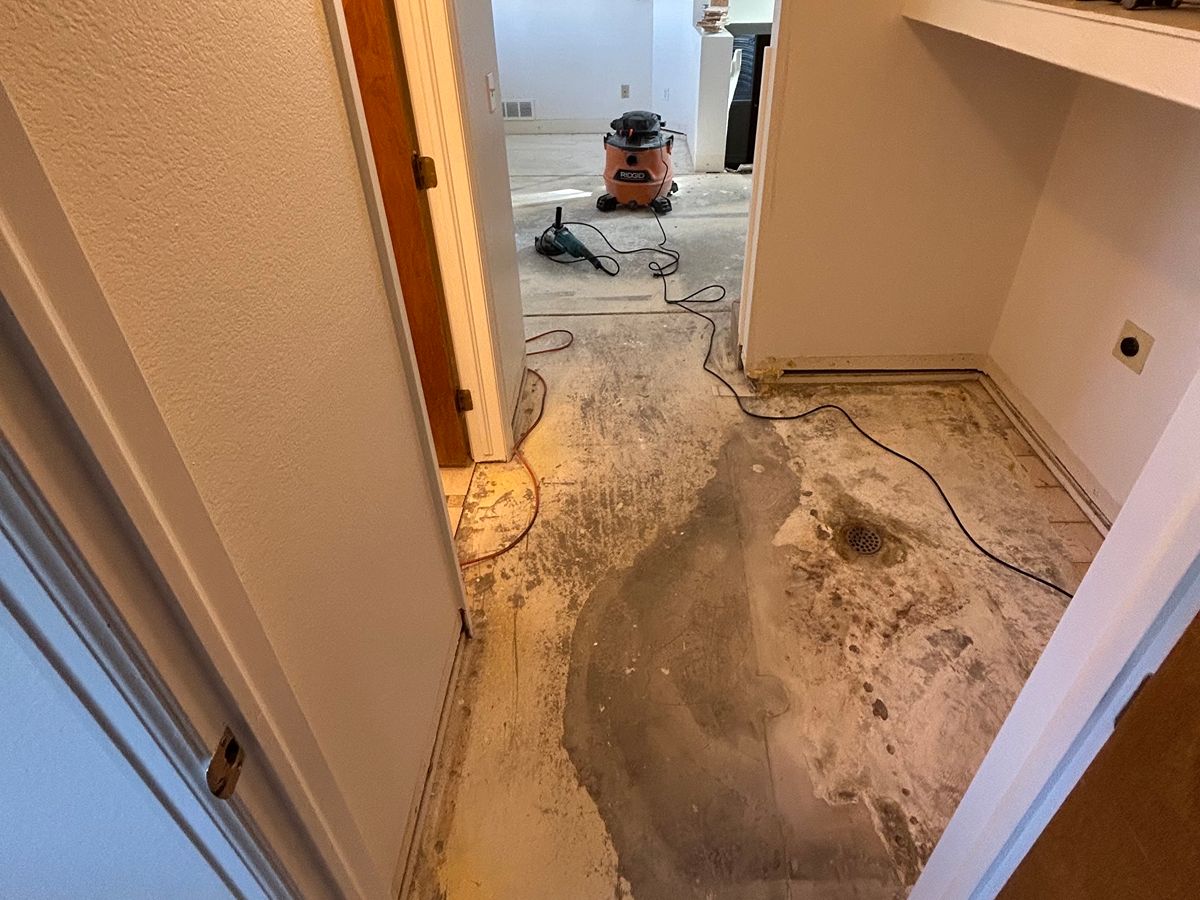
Denver’s housing mix shapes a lot of these jobs. Whole neighborhoods like Virginia Village, University Hills, and Harvey Park were built out during the postwar boom, and the homes there don’t all sit on the same kind of floor. Before laying laminate in these mid-century ranch homes, it pays to know whether the planks will go over a concrete basement floor or a wood subfloor, because concrete changes the moisture prep and is one of the first things to sort out before anyone talks price.
How much should labor cost to install laminate flooring?
Labor alone commonly runs somewhere around $2 to $8 per square foot, and it is a sizable share of the total project cost. Where you land in that range comes down to how the floor goes down and how simple the room is.
A floating click-lock floor is the faster method. The planks snap together and rest above the subfloor without glue or nails, so labor on a clean, level room sits toward the lower end. A glued-down floor takes more time and skill, so it generally costs more per foot. Room shape matters too, because a plain rectangular bedroom installs quickly, while a space full of closets, angles, stairs, or tight doorways means more cutting and slower work.
A few things drive labor up in older Denver homes:
- A slab or subfloor that needs leveling before planks go down
- Lots of transitions, corners, or built-ins to cut around
- Stairs, which are priced separately from open floor
- Moving furniture or pulling baseboards, if that is not handled first
Ask any Denver quote to state labor as its own line so you can see exactly what the install costs versus the materials.
Do you need underlayment for laminate floors?
Most laminate floors need underlayment, but not always as a separate roll. Underlayment is the thin cushioning layer between the planks and the subfloor, and it helps with sound, comfort, and moisture protection. The key question is whether your specific planks already have it built in.
Plenty of laminate today comes with an attached pad on the back. If your product has that, you do not buy and lay a separate foam pad on top of it. In fact, stacking a second pad under attached-pad planks builds up too much cushion, which stresses the click joints and can lead to failure over time. Use attached underlayment as it comes, and add a separate pad only when the planks do not have one.
When the planks don’t come with a pad, a separate underlayment adds its own material cost on top of the installed price, and over concrete the vapor barrier belongs on that line too.
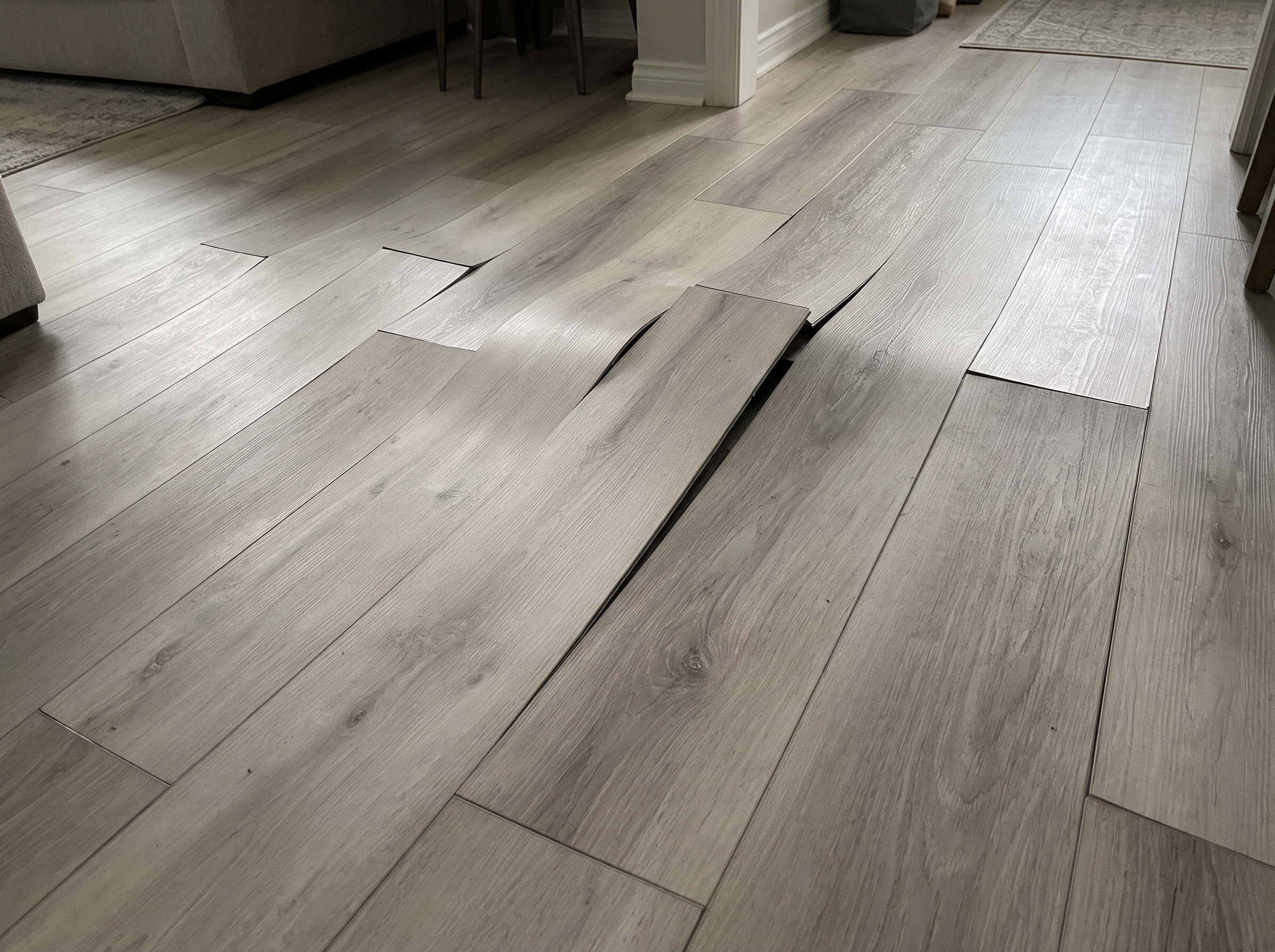
The exception is moisture. Over a concrete slab, which is common in Denver basements, manufacturers call for a vapor barrier. Concrete can pass moisture vapor even when it looks and feels dry, and moisture trapped under a laminate floor can make the planks cup, peak, or separate at the seams. A 6-mil polyethylene film or an underlayment with an equivalent built-in barrier handles that, and skipping it typically voids the product warranty. Which layer you actually need depends on your planks and your subfloor, so it gets decided per room.
How much does it cost to remove and replace laminate flooring?
Removing old laminate adds its own per-square-foot charge, and how the old floor was installed is what moves that price most. Replacement then means paying removal plus the full cost of the new floor on top.
A floating laminate floor comes up fast. The planks were never glued down, so they unlock and lift with basic tools, which keeps removal at the low end. A glued-down floor is a different job, because the adhesive has to be scraped off the subfloor before anything new goes in, and that extra labor pushes the cost higher. Some quotes include disposal and haul-away and some list it separately, so ask whether it is included.
A full replacement, per square foot:
- Remove the old floor: an added charge, higher if it was glued
- Install the new laminate: about $3 to $11 installed
- Subfloor leveling or repair, if the slab or subfloor needs it: extra
One more note for older homes: if an older vinyl tile or sheet floor turns up under the laminate, it and the adhesive beneath it can contain asbestos, and the only way to know is a lab test, so have it tested before anyone disturbs it.
Is laminate flooring cheaper than hardwood?
Yes, laminate is meaningfully cheaper than hardwood in Denver, usually by a wide margin. Installed laminate runs roughly $3 to $11 per square foot, while installed hardwood in Denver commonly runs about $8 to $22 per square foot, depending on the species and whether it is engineered or solid. On a 500 square foot space, that gap can easily reach a few thousand dollars.
The savings come from both material and labor. Laminate uses a printed wood-look surface over a dense fiberboard core, so it costs less to make than real wood planks. It also installs faster, since a floating floor snaps together instead of being nailed or glued board by board like solid hardwood. Laminate is also scratch-resistant and holds up well to daily wear, which is part of its appeal in busy households.
The trade-off is longevity and repairability. Solid hardwood can be sanded and refinished many times over decades, while laminate cannot be refinished and gets replaced once it wears out or takes water damage. The choice comes down to your budget and how long you plan to keep the floor. If you want the wood look at a lower upfront cost, laminate wins on price; if you are after a floor that can be renewed for generations, hardwood earns its higher number.
Sorting out a real number for a laminate floor comes down to your room, your subfloor, and whether a slab under it needs a moisture barrier, and that is easiest to judge in person. We bring laminate samples to your home so you can see them in your own light, and every job carries our 100% satisfaction guarantee plus a full 18-month warranty: anything that needs fixing in that window, we fix at no charge, even if the damage came from something on your end. Ask for an itemized laminate estimate from CMC Flooring LLC, or call us at (720) 382-3006.