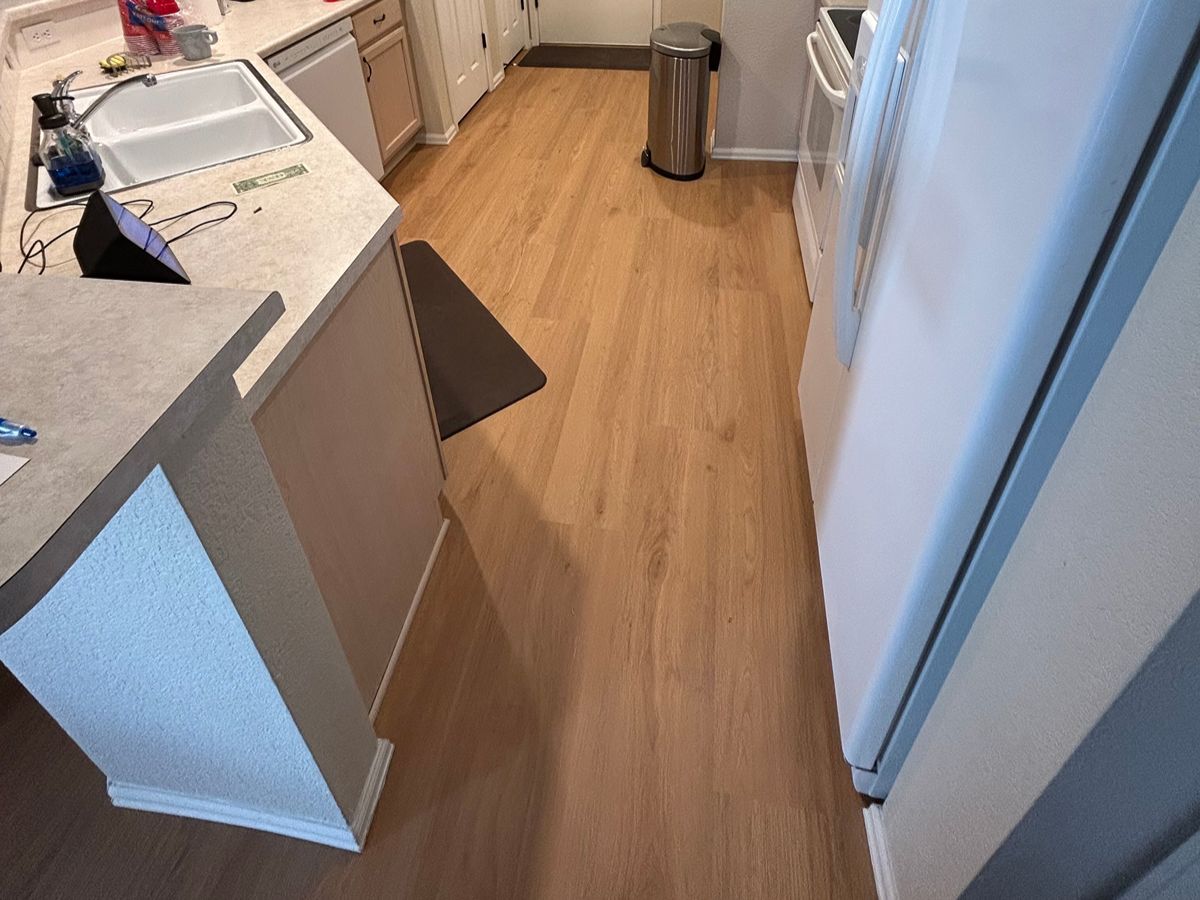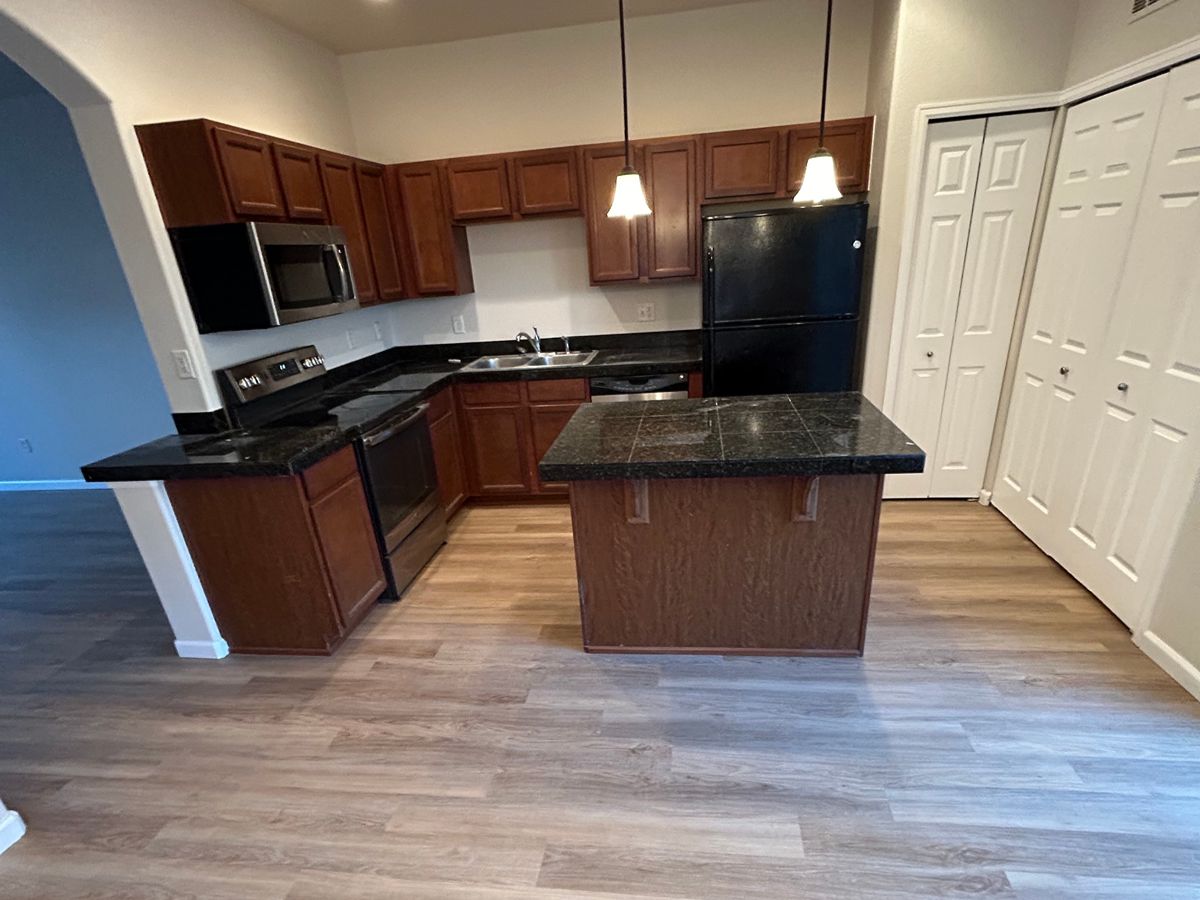
In Denver, vinyl plank flooring usually runs about $5 to $12 per square foot installed, with material and labor combined. Mid-grade planks tend to land near the $5 to $8 range, while thicker, premium products with a heavier wear layer push toward the $9 to $12 side.
That spread is wide because a floor is more than the planks you pick out. Two homes on the same block in Green Valley Ranch can get very different quotes for the same product, and neither installer is wrong.
Labor in the Denver metro tends to sit a little above the national middle, which is one reason a local quote often comes in higher than the numbers on a national calculator. Real estate and living costs here push flooring labor into roughly the $2 to $10 per square foot band depending on the job, and vinyl plank falls on the lower-labor end of that because it installs faster than tile or nail-down wood. So when you see a big national price range, remember the low end usually assumes a rural market and simple work.
Denver’s dry, semi-arid air and its wide temperature swings also shape which floors make sense here, and that feeds into cost. Vinyl plank is dimensionally stable and waterproof, which is a real advantage in a climate where indoor humidity can swing hard between a heated winter and a warm, dry summer. That stability is a big reason luxury vinyl plank has become the default choice across a lot of newer northeast Denver and Commerce City homes, and it keeps the material affordable relative to hardwood.
Why do vinyl flooring quotes vary so much in Denver?
The single biggest reason two quotes differ is the product tier. A thin builder-grade plank and a rigid-core plank with a thick wear layer can be double the price before anyone lifts a tool. After that, the work itself drives the number.
Here is what actually moves a Denver vinyl quote up or down:
- Material grade. Wear layer, core type, and plank size all change the per-square-foot cost.
- Tear-out and disposal. Ripping up old tile or carpet and hauling it away adds labor and dump fees.
- Subfloor prep. Leveling a slab or an uneven wood subfloor takes time, and a concrete slab in a finished basement may need moisture handling first.
- Transitions and trim. Doorways, thresholds, and new baseboard all add up.
- Stairs and room complexity. Stairs, closets, angled walls, and lots of small rooms mean more cuts and more labor.
A wide-open living room installs cheaply per foot. A choppy older floor plan with tile to remove costs more. When you want to compare quotes fairly, look at what each one includes for prep, not just the price on the plank.
What are the pros and cons of vinyl plank flooring?
The short version: vinyl plank is waterproof, tough, and budget-friendly, but it is not real wood and it will not add the same premium feel that solid hardwood does. For most Denver homes, the pros win.
On the plus side, luxury vinyl plank is fully waterproof, which makes it a strong pick for kitchens, bathrooms, and the finished basements that sit on concrete slabs all over the metro. It handles pets, kids, and rolling chairs well, it stays stable through Denver’s dry-air and temperature swings, and it costs far less than hardwood while mimicking the look convincingly. It is also quick to install and easy to clean.
The trade-offs are real too. Cheaper planks are thin and can dent under heavy furniture or show wear in high-traffic paths. Vinyl cannot be sanded and refinished the way hardwood can, so once it wears you replace it. And while a good LVP floor helps a home show well, high-end buyers in some Denver neighborhoods still expect real wood in the main living areas. The fix for most of the downsides is buying a thicker wear layer up front rather than chasing the lowest price.
Does vinyl flooring increase home value?
Yes, in the sense that fresh, modern floors help a Denver home sell faster and show better, though vinyl plank adds value differently than hardwood does. Buyers strongly prefer move-in-ready floors over worn carpet or dated tile they know they will have to replace.
In Denver’s competitive market, updated flooring is one of the upgrades that consistently improves a home’s appeal and how quickly it moves. The practical guidance here is pretty consistent: matching the floor to the neighborhood matters more than always reaching for the priciest option. In mid-range homes across areas like Montbello, Commerce City, and much of Aurora, a quality luxury vinyl plank floor reads as a clean, current upgrade and appeals to practical buyers who want a waterproof, low-maintenance surface. In higher-end pockets, buyers may still expect hardwood in the main rooms, so vinyl fits best in kitchens, basements, laundry areas, and rentals.
So the return depends on the home and the block. Vinyl plank rarely commands a premium the way real wood can, but it reliably removes a buyer objection and keeps a home from looking tired, which is often where the value shows up.
How long does it take to install vinyl plank flooring?
Most residential vinyl plank jobs wrap in a day or two. A single average room often goes down in a day, while a whole main floor spread across several rooms usually runs closer to two or three days once tear-out and prep are counted.
The timeline stretches when there is old flooring to remove, a subfloor to level, or a lot of stairs and small rooms to cut around. A clean, level slab with an open layout is the fast case. An older Denver home with tile to demo and an uneven floor is the slower one. Planks also sometimes need time to sit in the space and adjust to indoor temperature before they go down, which can add a short window before the actual install starts. A room-by-room schedule is worth a fuller conversation during your estimate, since the honest number depends entirely on your prep and layout.
Worn carpet, dated tile, or a floor that never quite matched your home is a common frustration in Denver, and vinyl plank is often the practical, waterproof answer for it. We bring flooring samples right to your home so you can see the colors and textures in your own light, then give you a clear, itemized quote with the prep spelled out. Everything we install is backed by our 100% satisfaction guarantee and a full 18-month warranty, so if something needs fixing in that window we come back and fix it at no charge, whether it came from the install or from everyday life. For vinyl flooring installation in Denver, reach out to CMC Flooring LLC at (720) 382-3006 or through our contact page for a free in-home estimate.