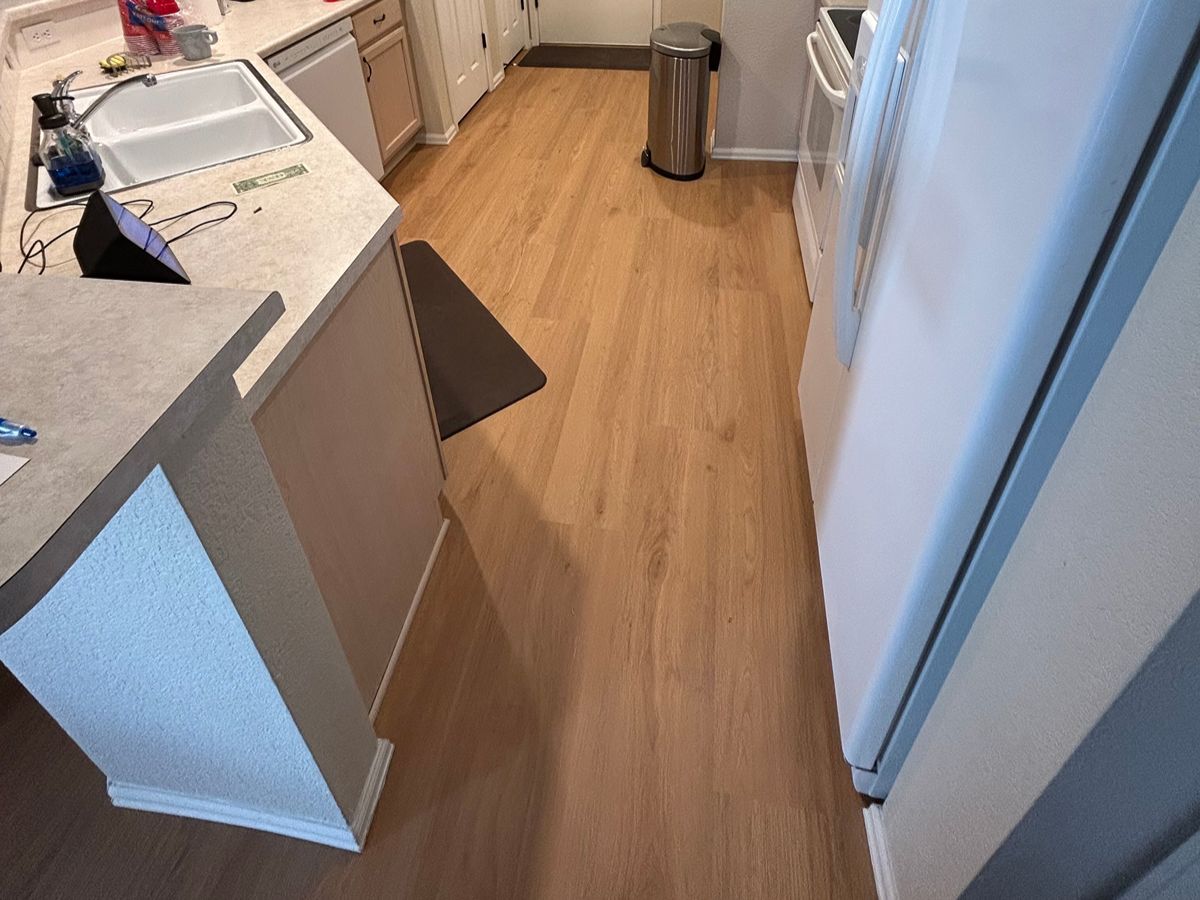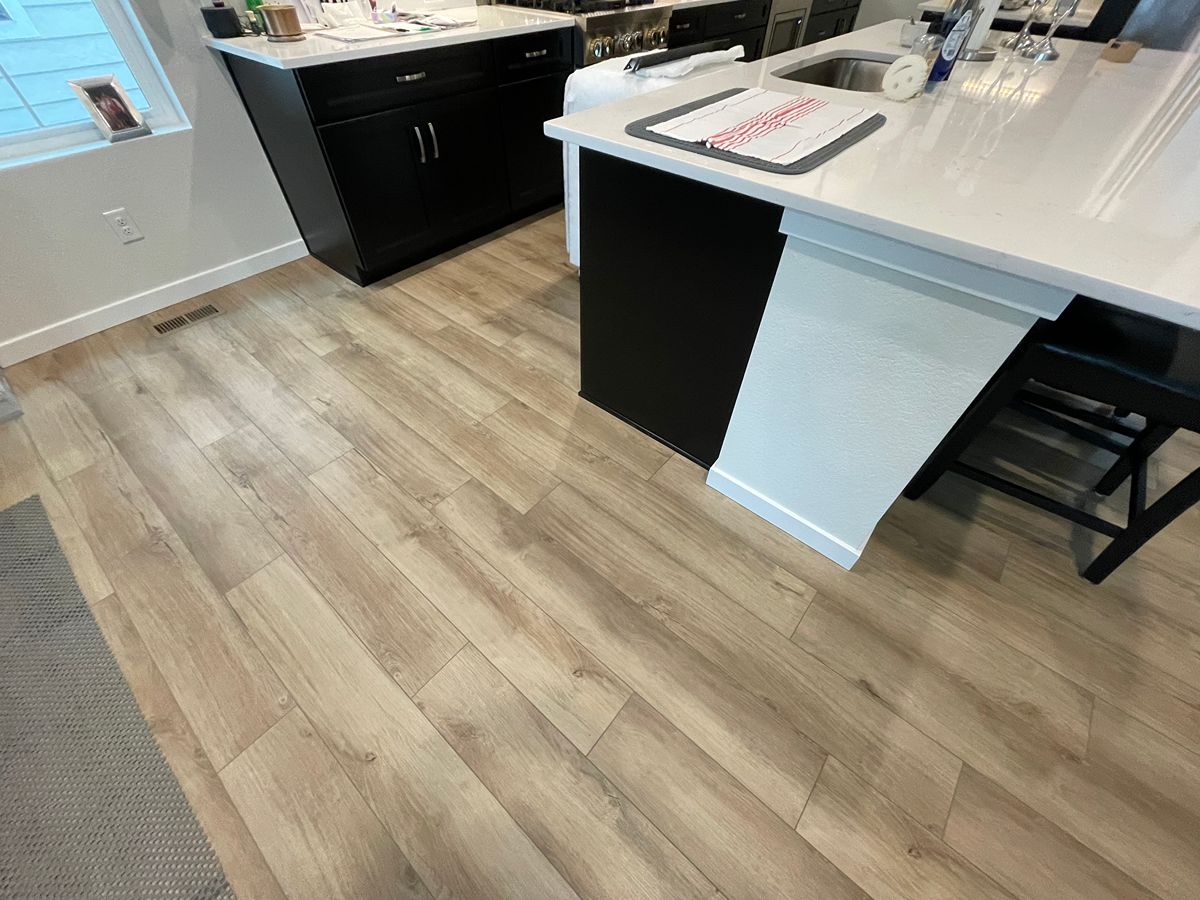
For most Denver homes with active dogs or cats, luxury vinyl plank holds up better day to day than hardwood, because its wear layer takes claw contact without the permanent scratching that solid wood shows over time. That said, the right call depends on your household, not a blanket rule, and both floors have a real place in a Denver home.
This matters more here than in a lot of cities. Denver is one of the most dog-heavy places in the country. Luxury vinyl plank installation in Denver is a common answer to that, but it is not the only one.
Around half of Denver residents own a dog, and city estimates put the local dog population near 160,000, which is more four-legged residents than kids under eighteen. Those dogs come with claws, wet paws off the trail, and the occasional accident, and your floor is what deals with all of it. Vinyl’s wear layer is engineered to resist scratches and scuffs, so a dog racing across the room or a cat with a running start usually leaves the surface looking the same. Hardwood is beautiful and adds real value, but the honest tradeoff is that claws mark it over time, and restoring the surface means refinishing rather than a quick fix.
Denver also throws a specific wrinkle at pet owners: dry indoor air for much of the year. Our semi-arid climate pulls moisture out of the air inside your home, and solid wood reacts to that by shrinking and gapping through the coldest winter weeks, then swelling back when things warm up. That movement is normal for wood, but it means seams open where dirt and pet hair collect. Vinyl does not swell or shrink with humidity the same way, which is one reason it gets recommended so often in this market.
Do dogs ruin vinyl plank flooring?
No, dogs do not ruin quality vinyl plank flooring under normal use. The top of an LVP board is a clear wear layer, and that layer is what takes the abuse from nails, zoomies, and daily traffic while the printed wood look underneath stays protected. Denver sees a lot of that kind of wear, since roughly half of local households own a dog and many of those dogs are on and off the trails all week.
The wear layer is measured in mils, and thicker means tougher. A 12-mil layer handles a typical household well, and a 20-mil or heavier commercial-grade layer is the strongest choice for a home with multiple dogs or large breeds. Textured, embossed finishes also help, because the grain scatters light and hides the small marks a smooth floor would show. A few simple habits go a long way here too:
- Keep pet nails trimmed so claw contact stays blunt.
- Put mats under food and water bowls where the floor gets the most wear.
- Sweep grit and trail dirt regularly, since sand acts like sandpaper underfoot.
If a single plank ever does get damaged, an individual board can usually be swapped out without redoing the whole floor. That kind of LVP flooring installation in Denver is a big part of why so many dog owners here lean toward it.
What is the best hardwood floor if you have dogs?
If you want hardwood with pets, choose a dense, hard wood species with a durable factory finish, because harder wood dents and scratches less under claws. Density is measured on the Janka hardness scale, and the harder options resist paw traffic better than a soft wood like pine, which marks easily. A tough, factory-applied finish also shrugs off scuffs better than an older on-site oil finish.
Species and finish are the two levers that matter most for a dog-heavy household. A wire-brushed or hand-scraped texture is worth a look too, since the built-in texture hides minor claw marks the way a textured vinyl does. Prefinished boards come with a cured, hardened top coat that stands up to daily traffic better than raw wood finished after install.
The real advantage of wood in a pet home is that it can be refinished. When years of nails and traffic finally dull the surface, sanding and recoating brings it back, and a well-cared-for floor can last for decades. Our hardwood floor installation covers the species and finish choices that make the most sense for how your household actually lives.
What are the disadvantages of luxury vinyl plank flooring with pets?
Vinyl is not flawless in a pet home, and the honest downsides are worth knowing before you commit. The surface can dull over years of heavy traffic, and a thicker wear layer only slows that, it does not stop it entirely. Very sharp objects or a dragged claw at the wrong angle can still nick the top layer, and unlike hardwood, vinyl cannot be sanded and refinished. The fix is replacing the affected plank instead of restoring the surface.
There are a couple of Denver-specific things to plan for as well. Vinyl reacts to temperature more than to moisture, and Denver is a genuinely sunny place, averaging around 115 clear days and another 130 partly cloudy days a year, so roughly 245 days with some sunshine according to the Colorado Climate Center at Colorado State University. In a home with big south-facing windows, sunlight and heat swings can cause a floating floor to expand and contract if it was not installed with the right gaps and prep. Basements built on concrete slabs, common across the metro, need a clean, level subfloor so the locking joints stay tight under a dog running full speed. Good preparation before the first plank goes down is what prevents hollow spots and loose seams later, and it is the part that separates a floor that lasts from one that does not.
Which is more expensive, hardwood or luxury vinyl plank?
Hardwood costs more than luxury vinyl plank in Denver, both up front and over a typical installation. Local hardwood installs generally land somewhere in the range of about $8 to $18 per square foot installed depending on species, grade, and site prep, with premium woods and complex patterns pushing higher. Denver-area LVP typically runs lower, often in the ballpark of $5 to $12 per square foot installed. These are ranges, not quotes, and your real number depends on the room, the subfloor, and the product you pick.
The gap comes from the material and the labor. Solid wood, plus the prep and finishing a good hardwood job requires, simply costs more than vinyl. Where hardwood earns its price back is longevity and resale, since a well-maintained wood floor can be refinished and can last decades. LVP gives you a pet-tough, waterproof surface for less money now, which is why so many dog owners here start there. The right pick is the one that fits your budget, your pets, and how long you plan to stay in the home.
Living with pets in Denver means your floor takes a beating from claws, trail mud, and dry-winter wood movement all at once, and picking the wrong material is an expensive thing to get wrong. We install both LVP and hardwood, so we help you weigh what actually fits your household instead of pushing one answer, and every job carries a full 18-month warranty where we come out and fix anything that needs fixing at no charge, whether it came from the install or from your dog. For vinyl flooring installation in Denver, contact CMC Flooring LLC at (720) 382-3006 for a free in-home estimate, and we will bring real samples so you can see them in your own light before you decide.