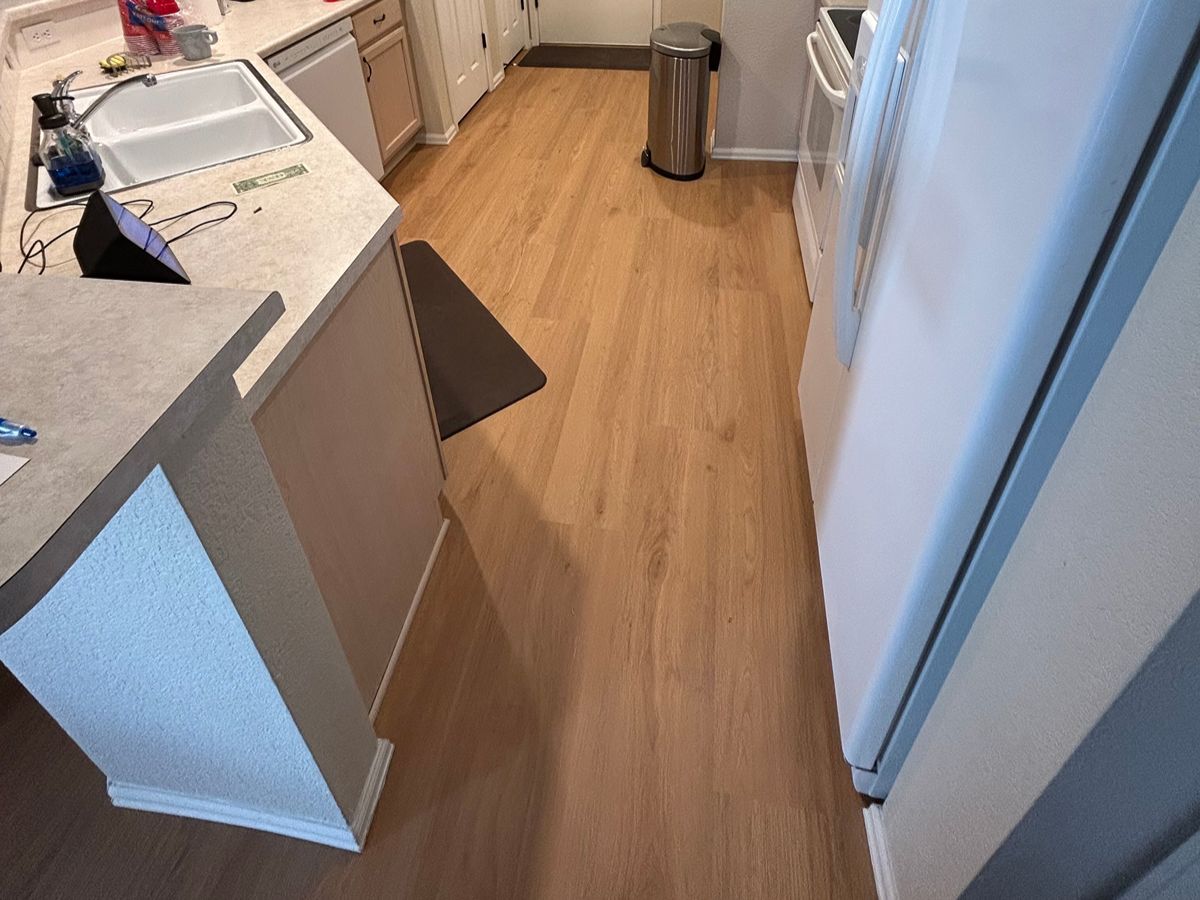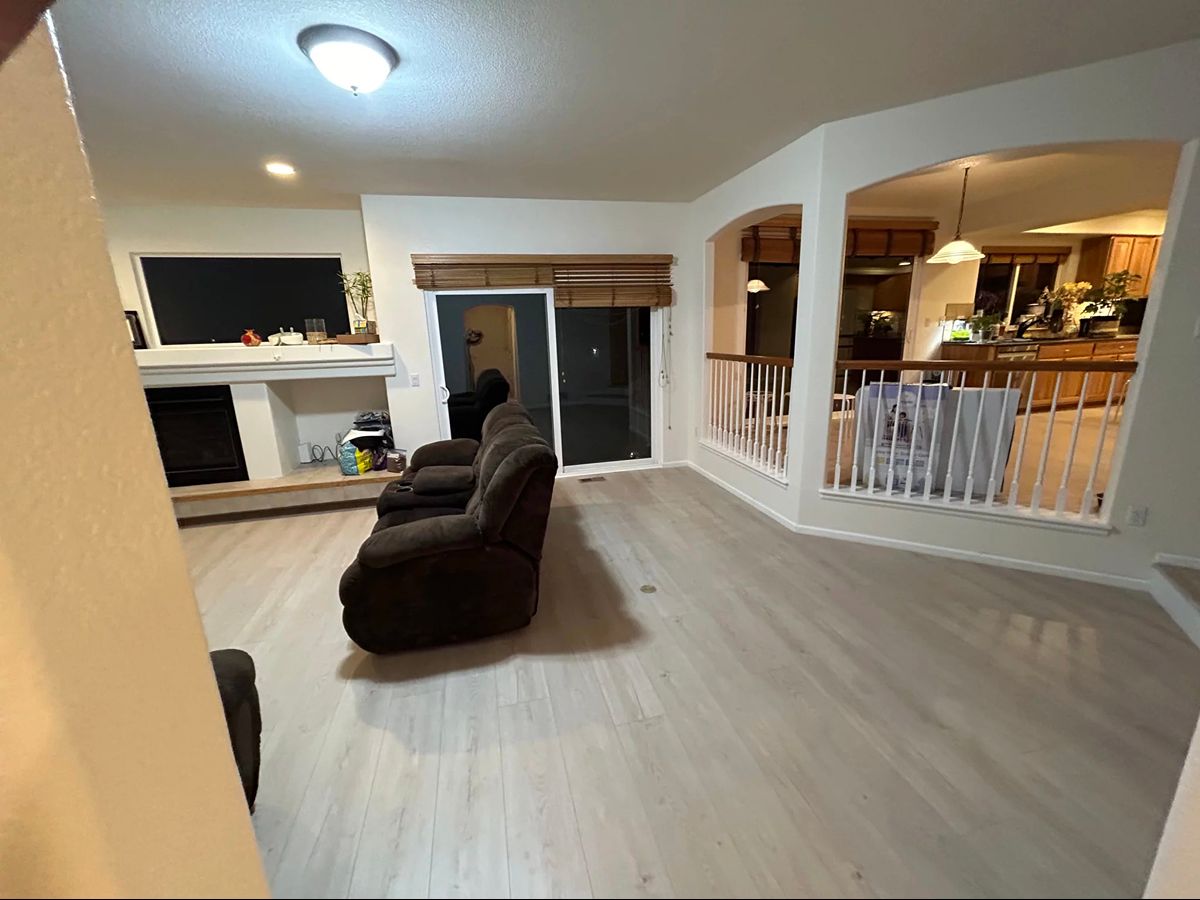
Yes, luxury vinyl plank is a strong fit for Denver’s climate, because it handles the mile-high mix of dry air, hard sun, and big temperature swings far better than wood does. Denver sits at 5,280 feet, where the thin atmosphere lets through more intense sunlight and bigger day-to-night temperature shifts than most cities see, and LVP takes that in stride where hardwood would gap and cup.
Anyone who has watched a Front Range afternoon go from shirtsleeves to a jacket knows how fast the temperature can move here. That daily swing is exactly the kind of stress that wears on flooring over the years.
The reason LVP works is in how the material is built. It is a synthetic, nonorganic product, so it does not soak up and release moisture the way solid wood does, and its expansion and contraction with temperature is a small fraction of what hardwood goes through under the same conditions. Denver’s dry indoor winters, which are hard on wood floors, barely register with vinyl. The part that actually matters for LVP here is temperature, not humidity, so the whole conversation shifts to how hot a floor gets in the summer sun and how cold it gets in an unheated space.
Denver’s real challenge for any floor is the sun and the swing. Depending on how you count sunny days, the metro sees anywhere from around 245 to 300 days of sunshine a year. According to NWS Denver/Boulder climate normals, the average high is about 67 degrees and the average low about 38 degrees, so the typical daily temperature swing runs around 29 degrees, with the bigger 40 to 50 degree swings showing up now and then but not as an everyday thing. On top of that, high-altitude UV is stronger than what people expect, so south- and west-facing rooms take a real beating through big windows. That is the local reality LVP has to live in, and understanding it is the difference between a floor that lasts and one that lifts at the seams.
What is the maximum temperature that vinyl flooring can tolerate?
Most residential LVP is rated to perform in spaces kept roughly between 55 and 85 degrees Fahrenheit. That does not mean the floor fails the moment it goes past 85. What it means is that dimensional movement starts to pick up above that range, and sustained heat well into the 95 to 100 degree zone is where you get noticeable expansion and, with glue-down products, softening adhesive. Some manufacturers set the hard ceiling much higher, requiring a glued-down install only if the floor will see temperatures above 140 degrees.
This matters in Denver because a sunroom or a room with big south-facing glass can bake far hotter than your thermostat reads, especially on a clear summer afternoon when the city is pushing into the upper 90s. The fix is not a special product so much as a correct install. A proper expansion gap around the perimeter, usually about 1/4 inch, gives the planks room to grow and shrink without buckling.
What happens if vinyl flooring gets below freezing?
Cold makes vinyl contract and stiffen. In freezing conditions the planks pull in slightly and become less flexible, which is why an unheated space is where problems tend to show up. Many vinyl products are only warrantied to stay within 10 to 20 degrees of normal household temperatures, and several manufacturers require a glue-down install if the floor will ever drop below 32 degrees. A floating floor in a heated, lived-in home stays well inside that safe zone all winter.
The spaces to watch in Denver are the ones that go cold. During an arctic blast, Denver has recorded lows around 14 below zero at the airport, and unheated basements, garages, and vacant second homes can slide toward or past freezing. If a floor is going into a space like that, the material and the installation method have to match the conditions. In a normally heated home, freezing is a non-issue, and the same expansion gap that handles summer heat also gives the planks room to contract on the coldest nights without pulling apart at the seams.
Do high end homes use luxury vinyl plank?
Yes, plenty of higher-end homes use LVP, and the reasons are practical rather than budget-driven. Modern rigid-core planks are waterproof, hold up to pets and heavy traffic, and come in wood and stone looks that read convincingly underfoot. In a climate like Denver’s, where dry winters and strong sun are tough on real hardwood, a lot of owners choose vinyl on purpose because it stays flat and stable when a wood floor would move.
The gap between grades is real, though. A thin, low-cost plank looks fine on day one and wears through fast, while a thick-wear-layer rigid-core product looks and performs like a premium floor for decades. We can source any brand, so nobody is boxed into a fixed lineup. When a customer has not already picked a product, we carry lines like Paradigm and SK Flooring in a range of rigid-core options, and the right pick depends on the room, the traffic, and the sun it gets. Seeing samples in your own light is the honest way to judge whether a plank looks high-end in your space.
What is the average lifespan of vinyl floors?
Most luxury vinyl plank lasts 15 to 25 years in a normal home, and premium planks with a thick wear layer can reach 30. Cheaper vinyl with a thin wear layer can wear through in as little as 5 to 10 years, so the range is wide and the product grade drives most of it. The single biggest durability factor is the wear layer, the clear top coat measured in mils.
After the product itself, the install is what stretches or shortens that number. A level, properly prepped subfloor and correct plank spacing are what keep a floor gap-free and quiet for the long haul, and a poorly prepped base shortens the life of any floor no matter how good the planks are. Denver’s sun plays a role too, since strong high-altitude UV can fade vinyl over time in the brightest rooms, so shades or film on the worst south- and west-facing windows help the floor keep its color. Cared for and installed right, a good LVP floor in a Denver home is a 20-plus year investment.
Denver’s dry air, hard sun, and swinging temperatures wear on floors in ways that catch a lot of homeowners off guard, and the right flooring choice makes all of it easier to live with. Our luxury vinyl plank installation in Denver covers northeast Denver, Aurora, and Commerce City, matching the product and the install to how each room actually lives, and every job carries our 100 percent satisfaction guarantee plus a full 18-month warranty that covers repairs whether the issue came from the install or from something you did. To see samples in your own lighting and get a free in-home estimate, reach out to CMC Flooring LLC at (720) 382-3006.