For most Denver homes, luxury vinyl plank is the better pick in any room that sees water, while laminate is a strong option in dry rooms where you want good scratch resistance, sometimes for a little less money. They are not the same product, and the right one depends on the room and how the space gets used. The biggest difference between them is how each reacts to water, because a properly installed luxury vinyl floor has a waterproof core and laminate does not.
People shopping for new floors here often assume laminate and LVP are two names for the same thing, or that one is just a cheaper version of the other. They are built differently, they wear differently, and they fail differently. Laminate uses a high-density fiberboard core with a printed image layer under a clear wear layer. LVP is built on a vinyl core, usually rigid, with a printed design layer and a wear layer measured in mils. One core is wood-based and the other is plastic-based, and that drives most of the comparison.
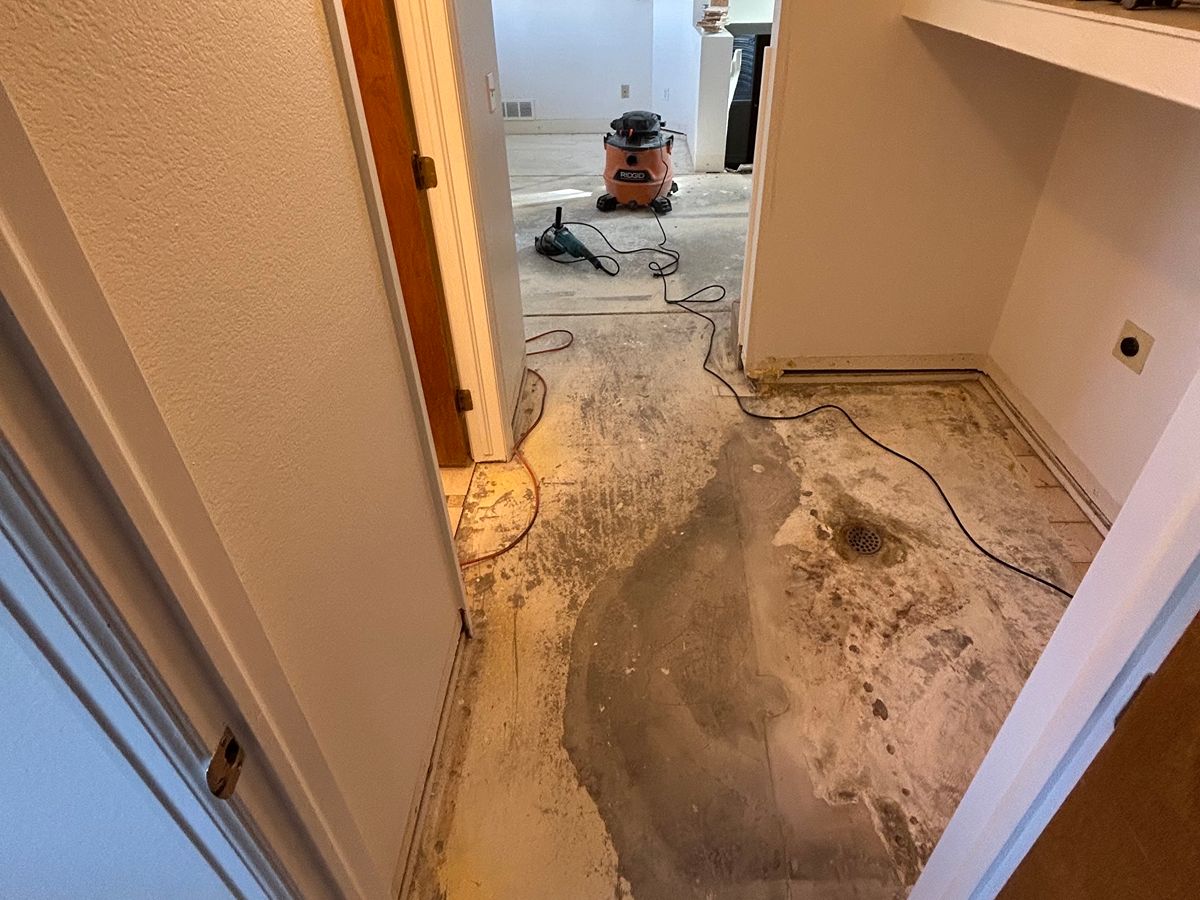
The subfloor matters for both. A floating floor is only as flat and dry as what sits under it, and a concrete slab, whether in a basement or at ground level, can pass moisture up into whatever floor is on top of it. That is a reason to think hard about which core you put down in a below-grade room and to check that the subfloor is flat and dry before anything goes in.
Is luxury vinyl plank considered a laminate?
No. LVP and laminate are two separate products, and mixing them up leads to the wrong buying decision. Laminate is built on a high-density fiberboard core, with a photographic layer that looks like wood or stone on top, then a clear protective wear layer over that. Luxury vinyl plank uses a plastic-based core, most often a rigid solid-core product (SPC) or a thicker foamed-core product (WPC), with its own printed design layer and a vinyl wear layer measured in mils.
That single difference in the core drives almost everything else. A fiberboard core is made of compressed wood fiber, so it can swell if water reaches it. A vinyl core does not absorb water the same way. So when someone tells you LVP is “just a type of laminate,” they are describing two floors that behave very differently once a spill, a leak, or a damp Denver slab enters the picture.
What lasts longer, vinyl or laminate flooring?
Quality versions of both floors land in a similar overall range, and the wear layer matters more than the label. Home-inspector life-expectancy charts put laminate at roughly 15 to 25 years, and quality vinyl lands in a similar range. The spread is that wide because the number depends on the product tier and the traffic, not on the material name alone.
The wear layer is the better predictor. For LVP, a thicker wear layer (20 mil and up) holds up better to daily wear, while thinner budget wear layers show scratches and dullness sooner. Laminate durability is graded on an AC scale, and for a busy household you want an AC3 or AC4 rating. Neither floor is sanded and refinished like hardwood, so once the wear layer is gone the planks get replaced rather than restored. Below grade, moisture reaching a laminate seam can end its life early, which is why LVP is often the safer pick in a basement.
Which is better for a kitchen, LVP or laminate?
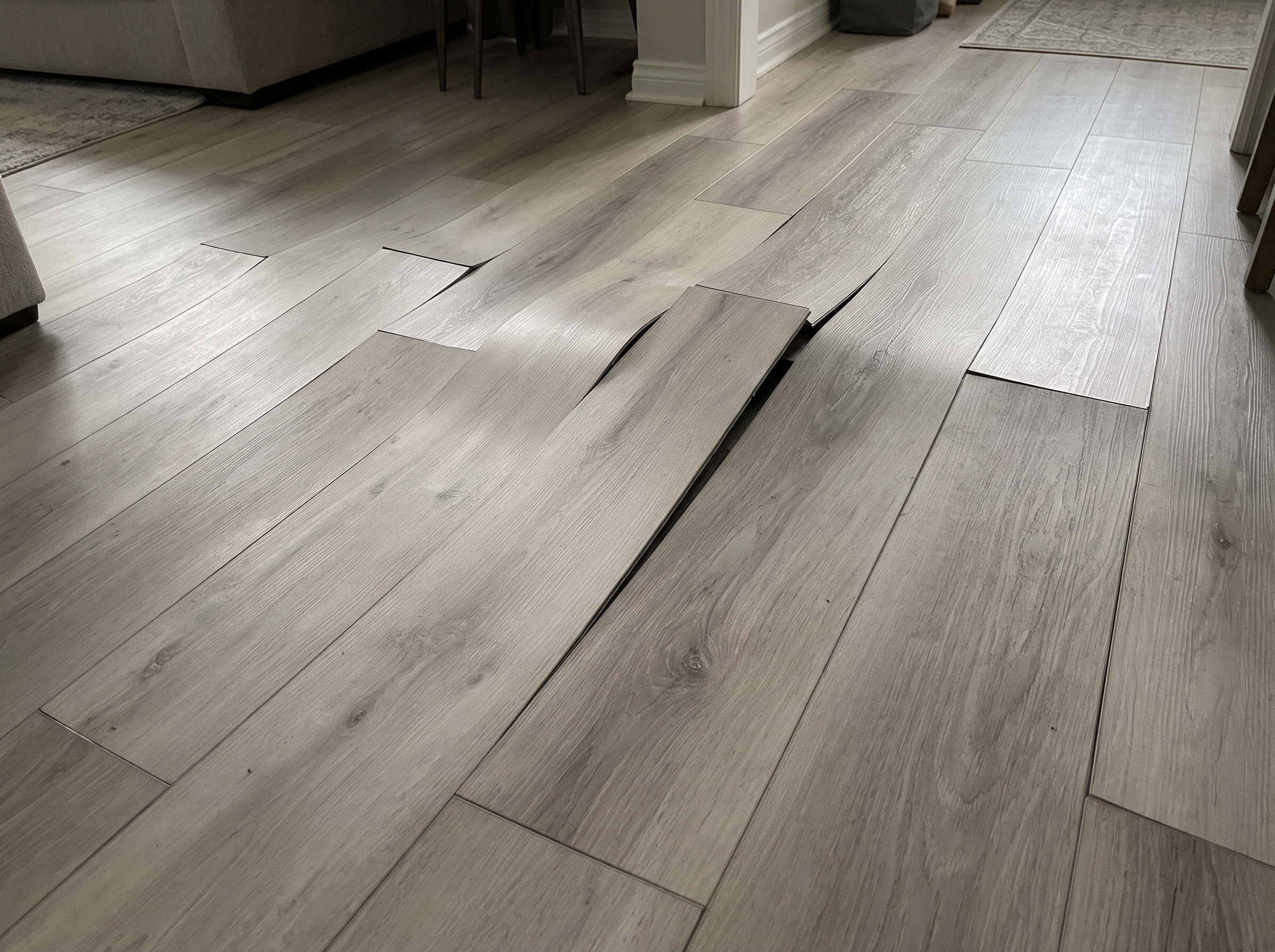
For a kitchen, LVP is the safer choice, and the reason is water. Kitchens deal with spills, splashes, dishwasher leaks, and mopping, and a laminate floor with a slow dishwasher leak can be ruined at the affected planks, which usually have to be replaced. The fiberboard core swells when it stays wet.
LVP handles that setting far better because the vinyl core does not absorb standing water the way fiberboard does. LVP planks are waterproof, but water can still reach the subfloor at the seams if it pools or leaks, so “waterproof plank” is not the same as a sealed, flood-proof floor. On the laminate side, read the product rating rather than the category: some laminates are sold as water-resistant, and a few are now marketed and warranted as waterproof, but that is specific to the product line, not laminate in general. The same logic applies to bathrooms, laundry rooms, and Denver basements, where LVP tends to be the practical answer.
What is the difference in cost between luxury vinyl plank and laminate?
Laminate can cost a little less than LVP up front, but the two overlap enough that the room and the product tier matter more than the category. In Denver, installed prices for both commonly start around $5 per square foot, and where a job lands above that depends on material quality, labor, and how much subfloor prep it needs.
Prep is where a quote can move. A floating floor is only as flat as the subfloor under it, and leveling or repairing a subfloor adds real cost before the first plank of a laminate installation goes down, and that prep varies from house to house. When you are weighing cost, factor in lifespan too: a floor you replace in ten years because water reached the core is not cheaper than one that lasts twenty.
The right choice between laminate and LVP in Denver is about matching the core to the room, the traffic, and how much moisture that room sees. We handle laminate flooring installation in Denver and LVP alike, and we bring samples to your home so you can see the color and texture in your own lighting. Every job carries our 100% satisfaction guarantee plus a full 18-month warranty, so if anything needs fixing in that window we come out and fix it completely at no charge, even when the problem traces back to something on your end rather than the installation. Family-owned and based in Green Valley Ranch, we give free in-home estimates across Denver. The fastest way to reach CMC Flooring LLC is (720) 382-3006, or you can pick an estimate time online.