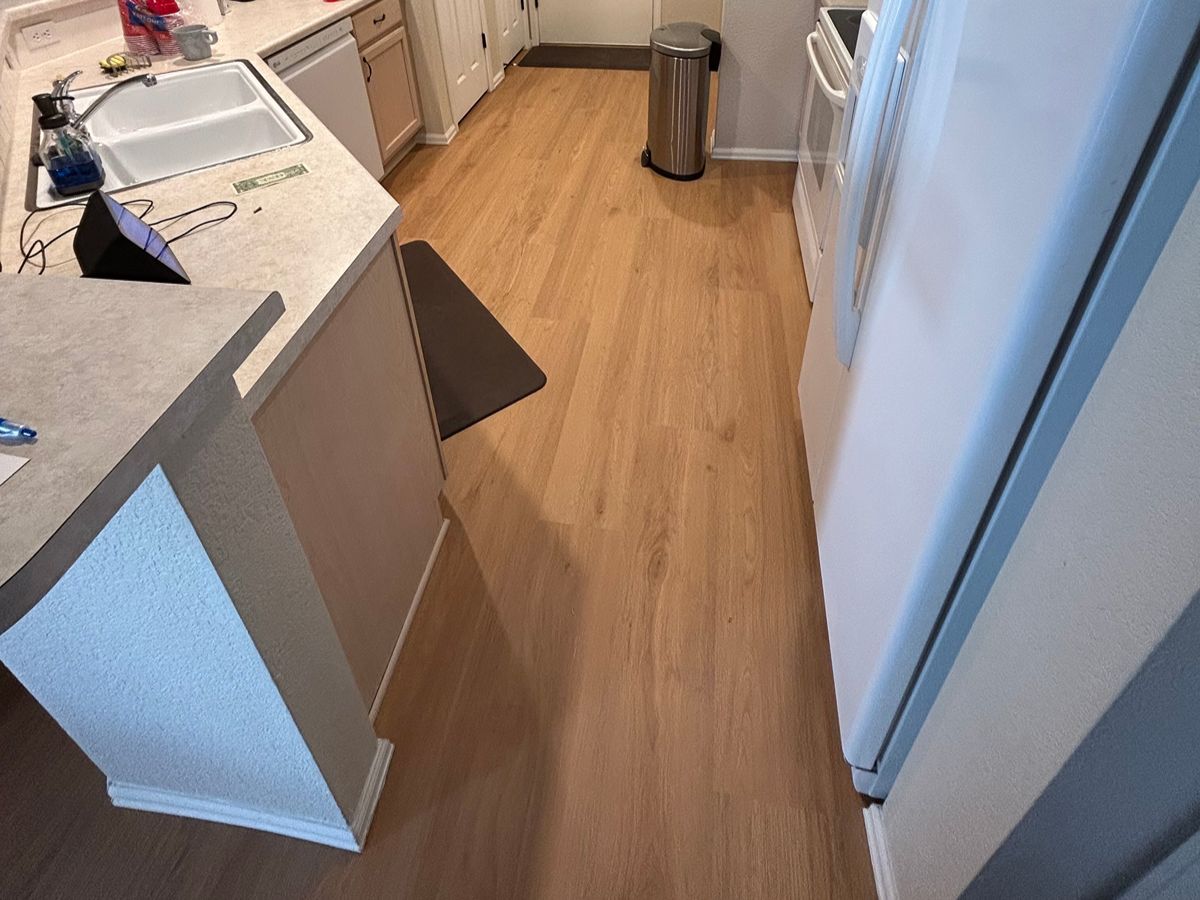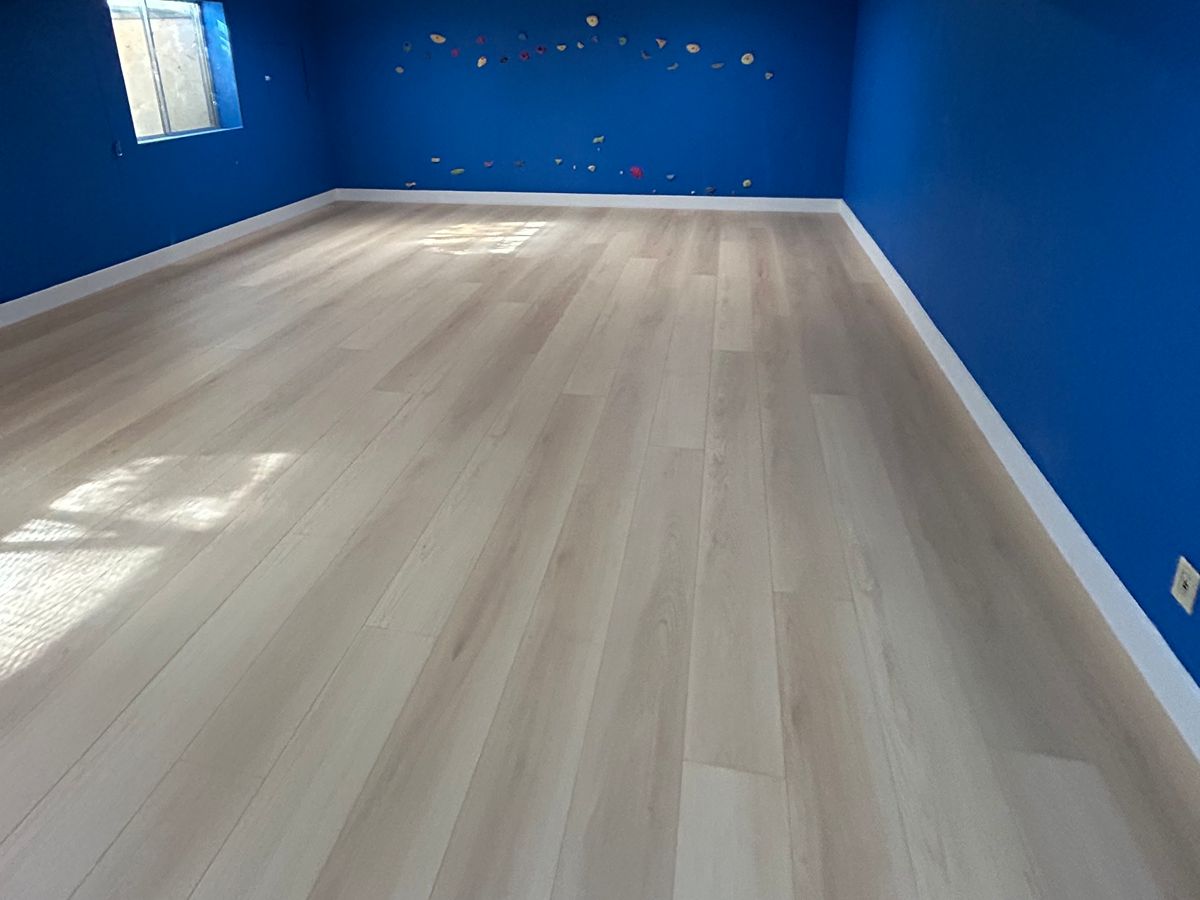
The core is the whole difference. SPC (stone plastic composite) has a dense core built from limestone powder, PVC, and stabilizers, while WPC (wood plastic composite) uses a wood-flour and plastic blend with foaming agents that make it thicker and softer underfoot. In Denver, where indoor air runs dry for much of the year and rooms swing from cold winter mornings to warm summer afternoons, that difference decides how the floor holds up and how it feels.
Both are still luxury vinyl plank, and both are waterproof. The label on the box just tells you what is inside the plank, and that inside part is what changes the day-to-day performance.
Here is the plainer version. Luxury vinyl plank is the format, the wood-look or stone-look plank you actually see on the floor. SPC and WPC are two ways of building the middle layer that holds that plank together. An SPC core stays rigid and dense, which means it barely moves when the temperature or moisture around it shifts. A WPC core traps tiny air pockets from the foaming agents, so it walks softer and feels warmer, but it gives a little more under weight.
Denver conditions push this choice in a specific direction, and they do it in every room, not just downstairs. Indoor air here runs dry for much of the year, and that dryness makes any floor with a foamed or wood-based core a little more prone to movement than the stone-dense option, whether it sits under a dining table, runs down a hallway, or covers a bedroom. Across northeast Denver, from Green Valley Ranch out toward Montbello, that plays out on main levels and upper floors as much as it does on a finished lower level over a bare concrete slab, which is simply the least forgiving version of the same thing. Both cores are waterproof. How each one handles dry air, a swing from a cold winter morning to a warm summer afternoon, and whatever sits underneath is where they split apart.
Which is more expensive, SPC or WPC?
They land close, and which one costs more depends on the exact product, not the core type alone. Around the Denver market, rigid-core vinyl plank material generally runs in a range, with WPC often carrying a small premium because it uses more material in a thicker plank. Some sources put WPC at roughly fifty cents to a dollar-fifty more per square foot than a comparable SPC product for that reason, while others flip it and show SPC costing a touch more for its dense core. The honest picture is that the gap is small and product-specific.
What moves the price far more than the core is the wear layer on top. Jumping from a 12-mil to a 20-mil wear layer adds real cost, and that upgrade does more for how long the floor lasts than the SPC-versus-WPC decision does. Plank width, attached underlayment, and the realism of the print all add up too. When we bring samples to your home, we can lay out both core types in your own lighting and show you exactly where the money goes.
What are the downsides of WPC flooring?
WPC’s soft, cushioned feel comes from a foamed core, and that same softness is its main weakness. Because the core has air pockets, it dents more easily under heavy or concentrated weight, so a refrigerator, a piano leg, or a loaded bookshelf can leave a lasting mark that a denser floor would shrug off. In a busy entry or a kitchen, that matters.
The second downside is movement. A WPC plank expands and contracts more with temperature swings than a stone-core plank does, which is worth thinking about in a room with big south-facing windows that heat the floor, or anywhere in the house that runs cold in January and warm by July. WPC is also thicker, so in a remodel it can create a height mismatch where it meets existing tile or hardwood at a doorway. None of this makes WPC a bad floor. It just means the comfort you gain comes with a trade-off in toughness and stability.
What are the disadvantages of SPC vinyl flooring?
SPC’s biggest strength, that dense stone core, is also the source of its drawbacks. It feels harder and colder underfoot than WPC, so standing on it for long stretches at a kitchen counter or stepping out of bed onto it on a winter morning is less forgiving. A plank with an attached foam or cork pad softens that, but bare SPC in a bedroom or an upstairs living room, the rooms where you actually want warmth underfoot, reads firm and cool.
The rigid core is also less able to hide a bad subfloor. Because SPC does not flex, it needs a flatter surface underneath, and it will telegraph high spots or dips in an old, uneven slab or a wavy upstairs subfloor rather than bridge over them. Skipping proper prep here shows up fast. SPC is thinner too, which is usually an advantage for matching floor heights, but it gives you less cushion and slightly less sound absorption than a thick WPC plank, so footsteps and noise carry a little more. Good underlayment and honest subfloor prep handle most of this, which is exactly the part a proper install earns its keep on.
Which type of flooring is better, SPC, LVP, or WPC?
There is no single winner, because SPC and WPC are both types of LVP, not competitors to it. LVP is the broad category, and SPC and WPC are the two core builds inside it, so the real question is which core fits your room. For most Denver homes we work in, the answer splits by use.
- Choose SPC for high-traffic and moisture-prone spaces: kitchens, entryways, mudrooms, and finished basements sitting on concrete. Its density resists dents and stays stable through temperature swings, which suits a slab that runs cool in winter.
- Choose WPC for comfort-first rooms where softness and warmth matter more than heavy-duty toughness, like bedrooms, a home office, or a quiet living room.
Plenty of homeowners run SPC through the main level and busy areas, then use a comfort-leaning product where they stand and relax. If you want to compare the full range of options for your rooms, our flooring services cover the whole process from picking the right core to the finished install.
Choosing between a stone core and a wood-composite core is hard to do off a spec sheet, especially when a busy kitchen, a quiet bedroom, and a lower level on slab all pull in different directions. That is exactly what a free in-home estimate is for. We handle luxury vinyl plank installation in Denver from picking the right core to the finished floor, bringing samples to you, laying them out in your own light and over your own subfloor, and walking through which core actually fits each room, and every job we install carries our 100% satisfaction guarantee plus a full 18-month warranty. Call CMC Flooring LLC at (720) 382-3006 to set up your free in-home estimate.